
A Humbling Experience

This piece was not supposed to be about AI
I was reading through the recent news and geopolitical shocks and got curious to understand Iran’s history a bit better. Persia was once one of Greece’s fiercest opponents, at times an actual existential threat, and that is part of what makes its history so interesting, because it sits at the heart of a long story about regional power, conflict and strategic change.
So I thought: let me quickly put together a very high-level, directionally correct timeline of major wars, expansion, contraction, reversals, winners, losers, and strategic consequences.
And then I had a very 'Paris-event' that has me spend nights with my laptop:
This would make a great interactive tool.
Now, I am not new to interactive prototypes. I have worked on enough of them to know that “it would be nice to make this interactive” is often the beginning of unnecessary suffering. Still, this time I had a new toy to try: Codex. And frankly, it had been out for way too long for me not to have at least touched it by now.
So I did.
Six hours later, I was exhausted, annoyed and angry, arguing with AIs over maps, file structures, broken logic, sizing issues, and user experience details that no normal person should spend that much emotional energy on.
But somewhere in that journey, I came out with something genuinely useful.
A lot more respect for my tech teams.
I have spent years on the business side working with tech teams to bring prototypes and tools to life. I knew my side required effort. I also knew their side took time, and I never thought they were just sitting around when something took longer than expected.
But knowing that in theory and actually living it yourself -in front of my very own eyes- are two very different things.
You see, I didn’t just throw prompts at Codex and go make coffee while the AIs handled the rest. I was actually reading what it -said it- was doing. I was watching it reason through the mess. I was watching it get stuck. I was watching it confidently go down the wrong path. I was watching it fix one problem and create two more. At some point, I started a second AI, ChatGPT, just to help me troubleshoot Codex.
And to my surprise, that helped in ways I wouldn't have expected it to.
Having the two of them support the problem-solving actually created synergies I did not expect. One would diagnose, the other would attempt a fix, then I would sit in the middle trying to guess what I don't really understand is going through and how I can lead them to success.
Honestly, even downloading Codex turned into troubleshooting.
First there was the issue of it not opening properly. Then ChatGPT suggested I might not have Git installed.
What is Git????
I did not know what Git did, but sure, why not, now I have Git. Then I had to download Visual Studio Code.
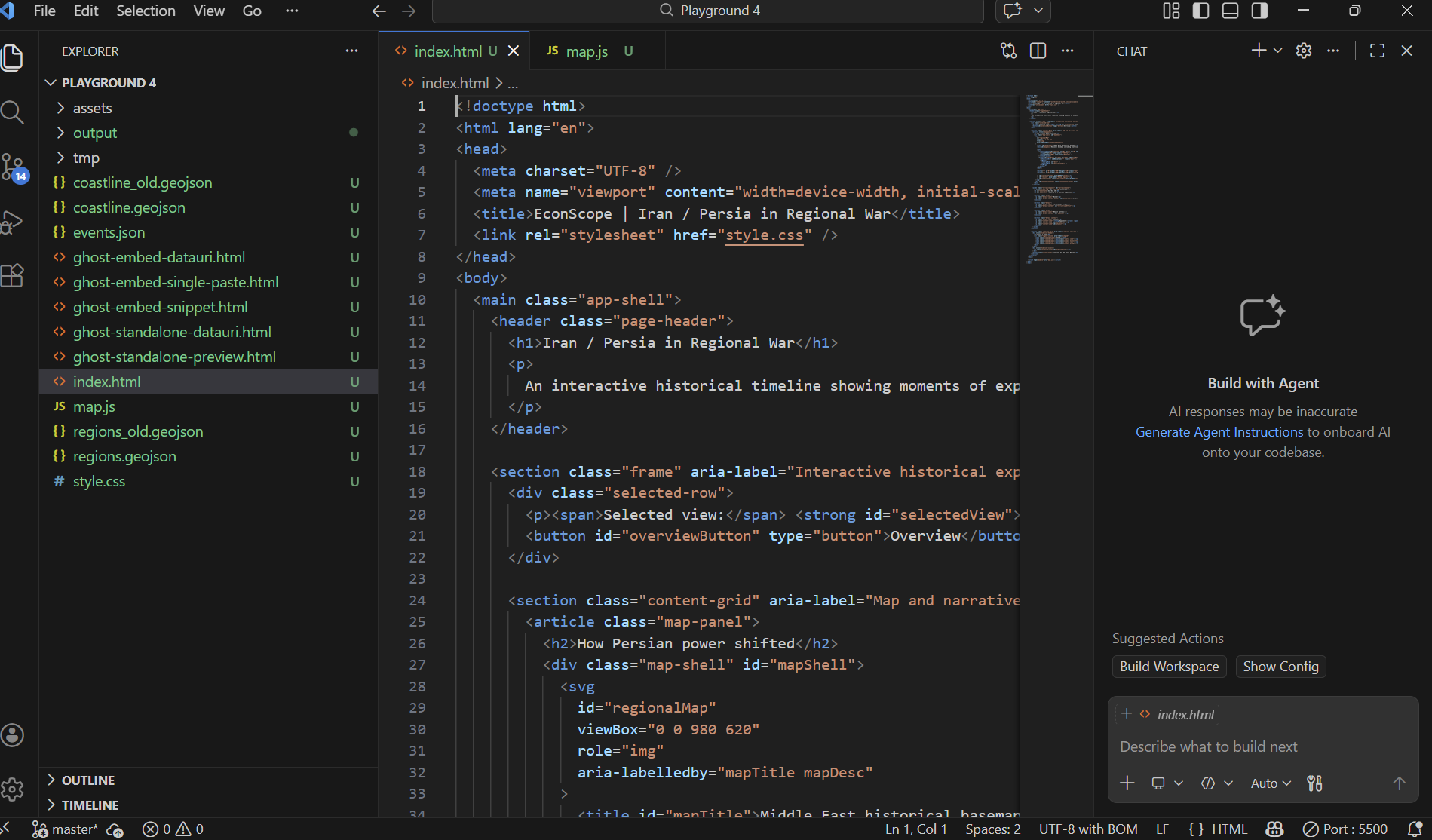
It looked like an R or Python setup. 'Pre-MBA Paris' would have quit right there. Actually, Pre-MBA Paris would have never even started this journey. Then I had to find an extension. Then running it. Then setting up the files. Then creating an HTML with additional files because it was a live HTML prototype.
What is a live HTML??
That is where my own lack of coding knowledge started becoming an actual problem. The AIs kept going down a route that probably made sense technically, but I did not really understand how live HTMLs work, and more importantly, I did not know how that would behave inside my blog environment. I honestly still do not fully know whether there was a cleaner way to do it.
Then came the map.
Let me show you what a refined -and 3h in- version looked like:
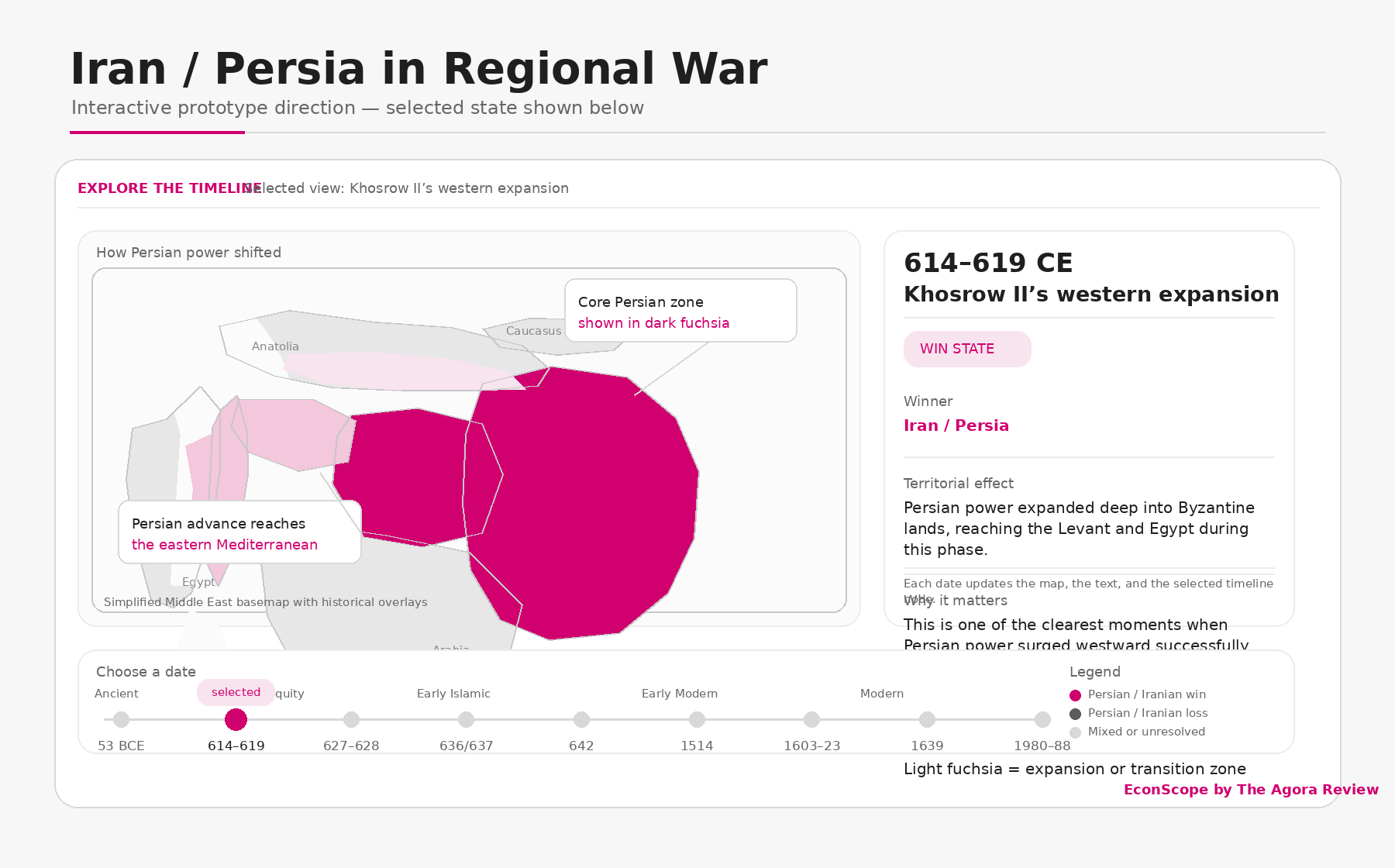
The “map” looked like giant bubbles floating in civilizational confusion. Things were too small, then too big, then distorted, then unreadable. 'We', meaning me and my hybrid team of two AIs, had to start building custom polygons and trying to make them behave like actual geography. They would not color properly. Layers broke. Shapes looked absurd. The UI kept getting in the way. Console errors started appearing, and at that point I really needed the second AI because Codex was becoming a bit helpless.
That was also one of the most interesting moments.
At one point ChatGPT more or less said:
I’m not sure whether Codex will succeed with this solution or fall back into similar errors.
And I remember pausing there.
Because yes, I know they are probabilistic. I know they do not “know” things the way people do. But seeing one AI basically admit that it could not predict what another AI was about to do made it somehow feel very real for me.
AI does not know what AI will do. Simple.
That stayed with me.
Eventually 'we' got something working. Then naturally a whole new round of problems began. Because “it works” is never the end.
Now it had to be repackaged into a single code block instead of many files, because I am not building a random sandbox, I am trying to publish in a real blog environment. Then the UI looked bad in Ghost. Then the formatting was off. Then it was too large. Then too small. Then the scrollbars were ugly. Then I had to reduce the use of scrolling.
Then the UX made sense on desktop but not on mobile. The timeline position no longer made sense. In a static visual or a slide, of course the timeline sits at the bottom. But in an actual interactive mobile experience, users needed to understand the date selection first. They needed to see it earlier. Which meant the timeline had to move up. Which meant that the logic of the interactive experience had to beat the logic of the visual composition. Which, I can assure you, my UI/UX OCD did not accept with grace.
And all this was for one little map tool.
At some point the code had reached around 40 pages. I optimized it down to roughly 25 before publishing -obviously. I wondered If Codex was running for hours ... how did coders do all this work in the past?
And now, as I head into another month of redoing everything on my current in-production prototype, I am genuinely a bit scared.
But, I did get something really valuable out of this mess.
I will do a better job helping my tech team do theirs.
Not because I suddenly became an engineer. I very much did not. I am still the person who had to install Git without really knowing what Git does. But I felt the multiplying factor of pain that one of my mistakes creates down the line.
It's a concept every strategist knows and champions for, but not every person walks the talk.
The frustration. The time drain. The way tiny things break big things. The way one fix creates three side effects. The way something can be almost correct for hours and still unusable. The way a vision that sounds simple in a meeting becomes an entire obstacle course once it has to live on a screen.
That experience changes how you collaborate.
AI triggered a piece of my humanity.
It makes you better at framing requests. Because you're better at appreciating why “one small tweak” can be a very loaded phrase. Better at respecting the invisible labor between concept and delivery.
So yes, I started with a casual curiosity about Iranian history and ended up in a six-hour wrestling match with AI, code, maps, file structures, and my own design obsessions.
And honestly, I’m glad I did. It was a humbling experience.