
Honey, I Shrunk the Oil Reserves
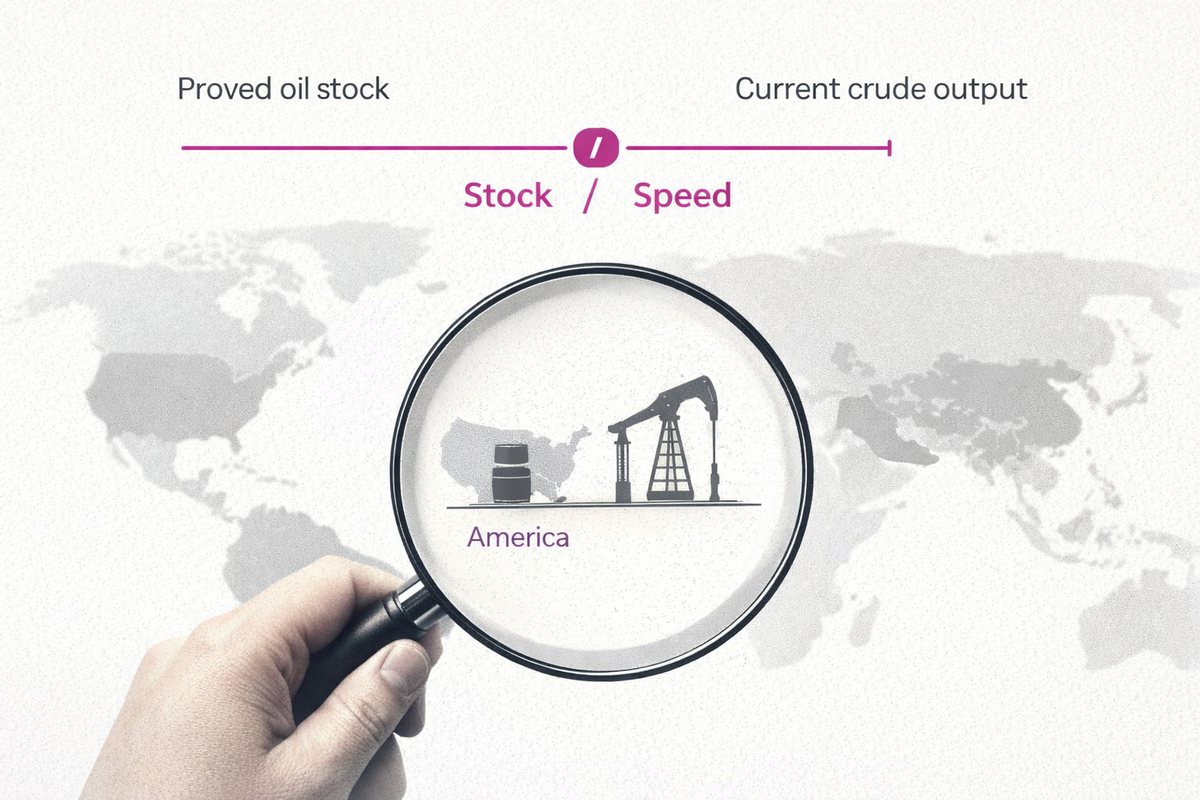
My birthday is less than a week away, which means I have entered that annual season of accidental self-reflection. Honey, I Shrunk the Kids came out the same year I did, and I am about two months older than the film. The movie came to mind when I run the following numbers:
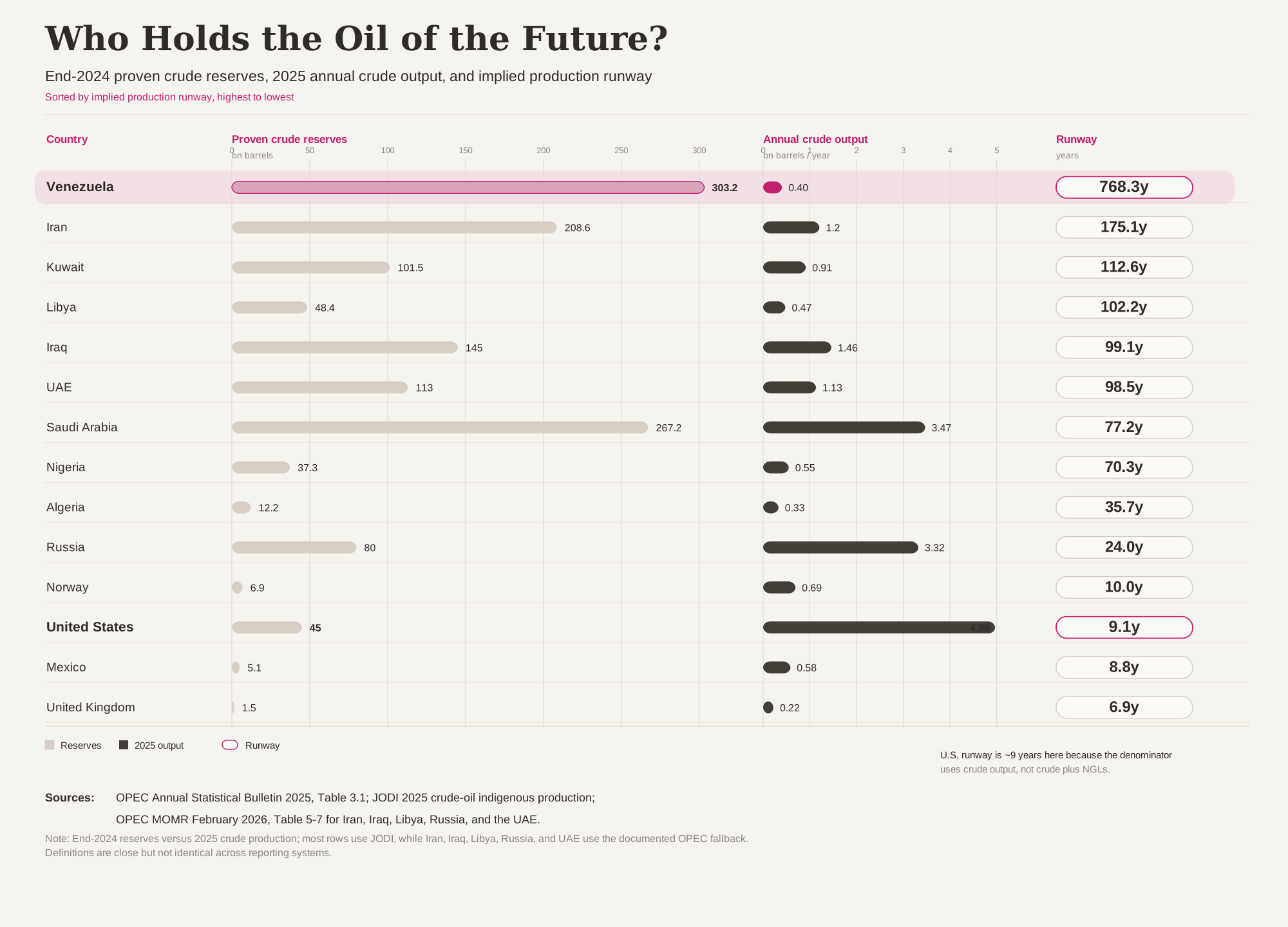
The chart pairs end-2024 proven crude reserves with 2025 crude production. Most production rows use JODI, while Iran, Iraq, Libya, Russia, and the UAE use the documented OPEC fallback. The U.S. line uses crude output rather than crude plus NGLs, which is why its runway compresses so sharply in this framing.
Venezuela comes at the top of the chart as its reserves are enormous, and its current crude output is so depressed that the implied runway stretches for centuries. On this logic, Venezuela looks less like a normal producer and more like an oil state living far below its geological weight.
The Gulf producers look formidable, which they are. Saudi Arabia, Iraq, Kuwait, the UAE, and Iran all retain serious depth. They combine large reserve bases with production systems that still matter to the global market every single day. Here too it is interesting to observe who has the biggest number underground, but also, who can sustain today’s extraction pace for the longest period.
The United States looks much shorter-lived than most readers would expect. On this proved crude reserve and current crude output logic, the U.S. lands at roughly nine years of runway. That does not mean America is about to “run out of oil.” It means the currently proved crude reserve base implies about nine years of runway at current crude output ceteris paribus.
It also says something important about American oil power. The U.S. sits at the center of the market because it produces at extraordinary speed. Speed creates weight. Speed creates price influence. Speed creates geopolitical relevance. Speed also compresses duration when reserve depth is measured against current output. The result is a superpower producer with immense present-tense power and a surprisingly short implied reserve runway in this specific framing.
The bottom of the chart sharpens the point further. The UK, Norway, and Mexico sit near the floor. These are mature producers, and the runway metric shows it immediately. Their reserve life looks short because their systems are already well-developed and heavily worked. Yet they still matter. Norway remains strategically important to Europe. The UK still sits inside a major energy and financial system. Mexico remains central to North American energy geography.
Oil power has always been about scale. It is also about tempo, as the illusion of permanence can weaken, and the map can start to look much more like a clock.
And since it's my birthday, here is a gift from me: